

Lose the Battle, Win the War
Canadian Prime Minister Carney’s deal to keep Alberta on side is a game of 3D chess intentionally designed to fail. And Trump is in on it.

“Misdirection is the key to world events.” – Anthony T. Hincks
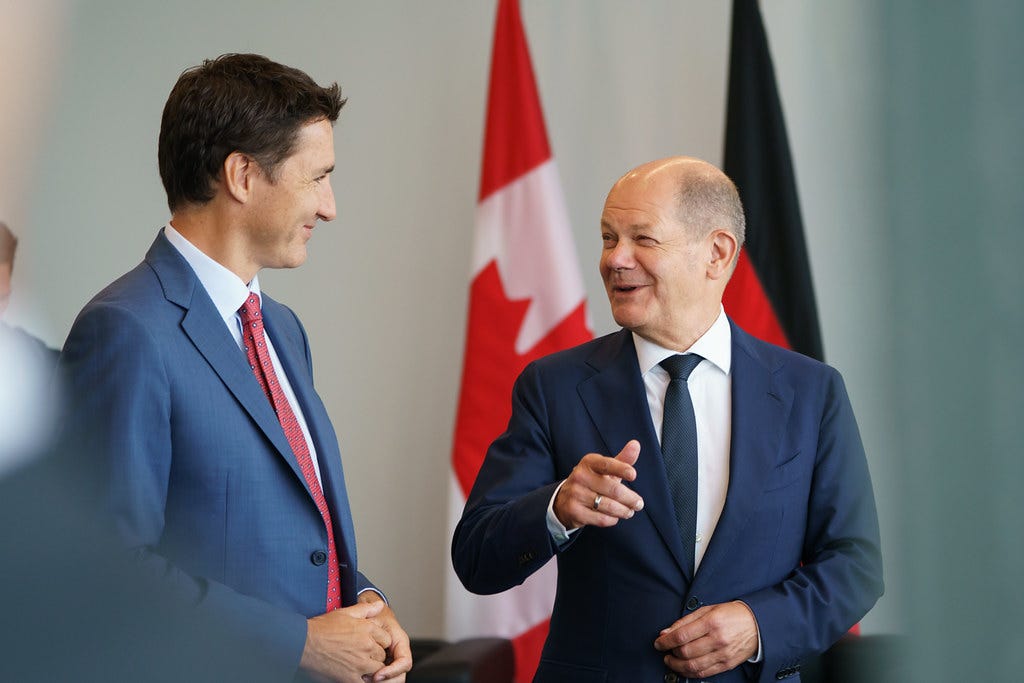
When German Chancellor Olaf Scholz traveled to Canada to beg Prime Minister Justin Trudeau for oil and gas in August of 2022 in the midst of Europe’s partially self-inflicted energy crisis, Trudeau could not “make the business case” for a pipeline from Alberta’s prolific Western Canada Sedimentary Basin to the country’s Atlantic coast. The best Scholz and his junket of German business leaders could get was a meaningless “green energy” agreement with a splashy announcement and a photo op. As we wrote about a month into our Substack journey, the “Canada-Germany Hydrogen Alliance” was a pipe dream that was never going to be built:
“The ammonia-from-electrolysis-from-wind energy project will require over 150 wind turbines (that don’t presently exist) on the Newfoundland coast to power electrolyzers to produce hydrogen, combine it with nitrogen from a Haber-Bosch plant (that doesn’t currently exist), and ship hydrogen in the form of ammonia via a fleet of supertankers burning bunker fuel (that also don’t presently exist) to Europe (which doesn’t presently have sufficient infrastructure to receive and process it).”
In fall of 2024, after nearly a decade of Trudeau simultaneously using Alberta and its oil sands as his “climate change” whipping post - while gladly taking its largest per capita contributions to Canada’s equalization payments - Alberta Premier Danielle Smith reached her limit. In late November, she announced plans to challenge a federal greenhouse gas emissions cap proposed by Trudeau and the ruling liberals in the federal government in Ottawa that would heavily impact her province’s oil and gas industry.
At the time, anti-Trudeau sentiment was widely held in Alberta and Saskatchewan, including a significant percentage of her constituents calling for secession from Canada. Trudeau was trailing Conservative Party Canada (CPC) leader Pierre Poilievre badly in polling ahead of national parliamentary elections required by October 2025.
Six weeks later, Trudeau would resign. Former Bank of England and Bank of Canada Governor Mark Carney would resign his position as Chair of Canada’s largest asset manager, Brookfield Asset Management, to replace him, winning Canada’s Liberal Party leadership on March 9th. Less than 10 days after being sworn in as Prime Minister on March 14th, Carney would dissolve Parliament, calling for early national elections on April 28th which the Liberal Party won easily, completely reversing Pierre Poilievre’s momentum and crushing the CPC’s and Western Canada’s hopes.
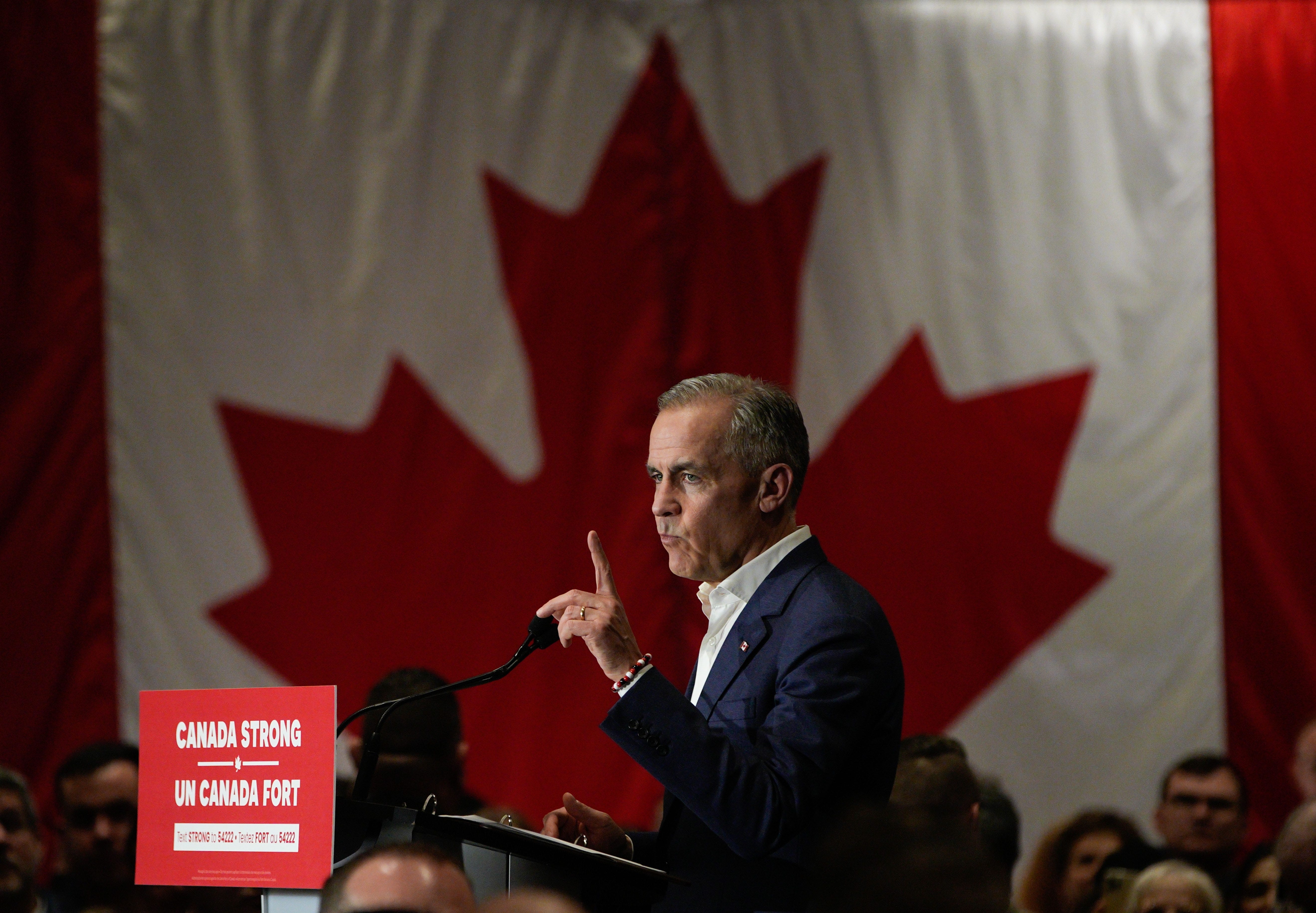
Those electoral victories exacerbated the Alberta secession fever. With the tension growing between Premier Smith and the federal government in Ottawa, twelve days prior to the election Doomberg predicted what would happen next (emphasis ours):
Carney will be elected Prime Minister on April 28 by a comfortable margin; Smith will trigger a constitutional crisis, providing cover for Carney to strike a grand bargain that finally resolves longstanding tensions between the provinces and Ottawa; and large infrastructure permitting reform will fall into place. Protests against these developments will be surprisingly muted, and those who do take to the streets will be largely ignored by the media. The entire effort will be wrapped in a thicket of patriotism, with Trump portrayed as a threat even greater than climate change itself.
The day after the national elections, Alberta’s Premier, who has voiced her personal opposition to secession, leveraged that threat, introducing two bills (both of which passed and entered force in July) that, among other features, would make it easier for citizens to get referenda on the provincial ballot. In June, Smith warned Carney that the federal government needed to come to the table:
“They have to take responsibility for the fact that that sentiment is there. I’m telling him what the pathway is to have it subside, and I guess it’ll be up to him to choose whether or not he takes that pathway.”
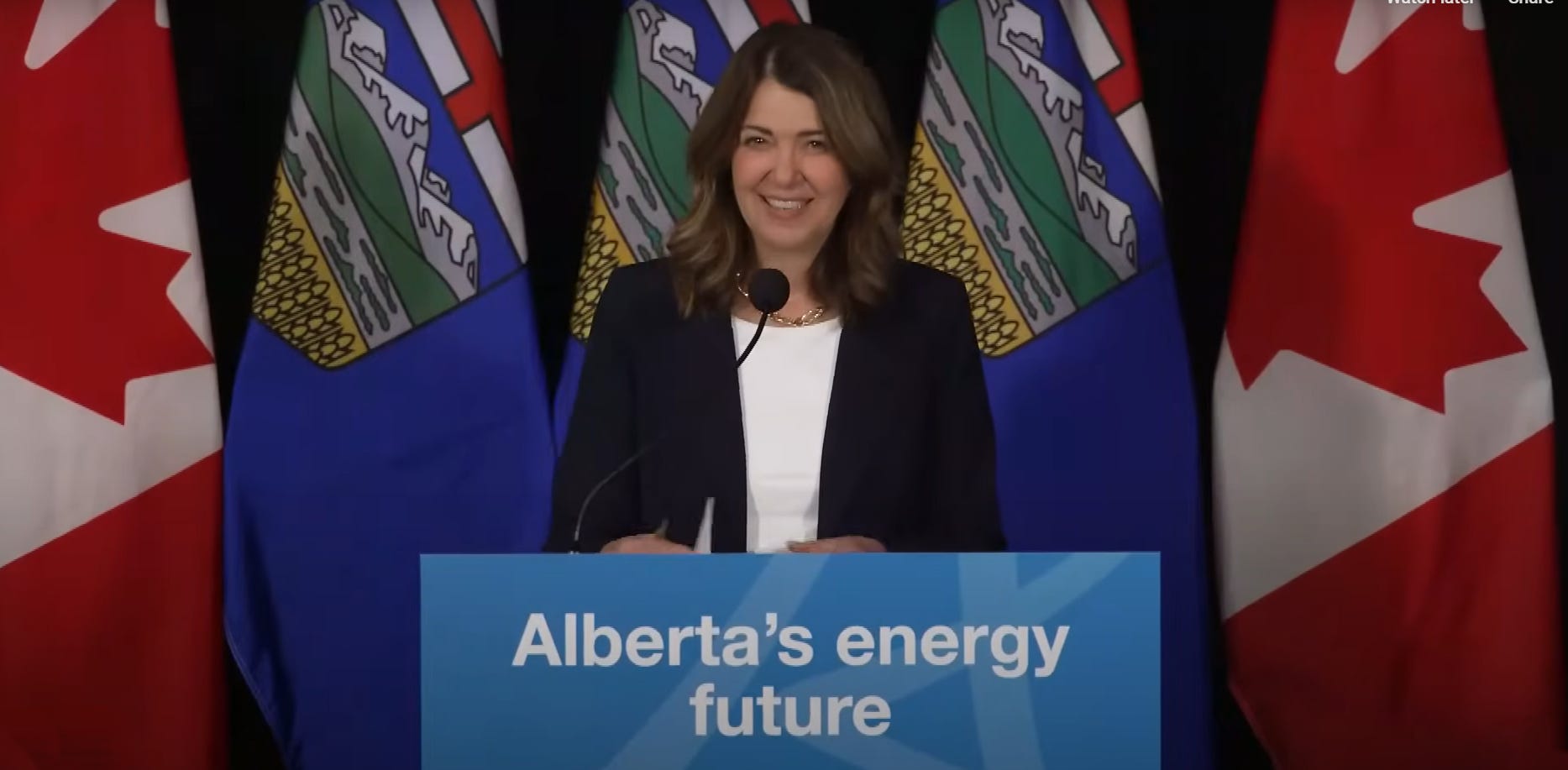
Four weeks ago, the Green Chicken’s prediction that Carney and Smith would strike a deal to tamp down the Alberta secession movement and repair relations between Ottawa and the province came home to roost. Sure enough, it was wrapped in patriotism, Orange Man Bad was a uniting force, and Trudeau’s “existential climate crisis” rhetoric was nowhere to be found.
What is the “grand bargain” Canada’s new Prime Minister and Alberta’s Premier struck last month? How do we envision the outcome unfolding despite the plan communicated to Canadians, and why? Let’s brave the cold and head north to speculate on how the deal to increase exports of Alberta’s oil and gas might be a master plan intentionally designed to fail so clever that the politicians involved – including President Trump - all claim victory.
We begin the story with the agreement Alberta Premier Danielle Smith hailed as a “new starting point for nation building” with Prime Minister Carney and the federal government in Ottawa. Signed on November 27th at the provincial government’s historic McDougall Centre headquarters in downtown Calgary, the agreement was memorialized as a Memorandum of Understanding (MOU).
MOUs are parties’ statements of intent. The are not binding, and lots of loose ends and details have to be agreed.
The agreement’s centerpiece is a new pipeline to move more than one million barrels per day (bpd) of oil from Canada’s bitumen (oil) sands around Fort McMurray in northeastern Alberta to the Pacific Coast in British Columbia (B.C.) for export to Asian markets. Prime Minister Carney agreed to declare the pipeline a “project of national interest,” setting the stage for referral to the federal Major Projects Office for the required approval. Importantly, Carney committed the Canadian federal government to exempting the pipeline from the coastal tanker ban (in effect since 2019) off B.C.’s northern coast, and possibly from other federal laws (e.g., the Impact Assessment Act, the Species At-Risk Act, and the Fisheries Act), “if necessary.”
Carney also agreed that Ottawa would suspend the proposed federal oil and gas industry emissions cap and Alberta’s obligations under the Clean Electricity Regulations (CER), both encouraging more hydrocarbon production and allowing the province more options to meet electricity demand. These were all part of what Premier Smith had dubbed the “nine bad laws” the Trudeau administration implemented during his decade long battle to limit Alberta hydrocarbon production due to “climate change.”
What did Smith trade for Ottawa’s turnabout? She agreed to strengthen Alberta’s “climate commitments” by increasing the industrial carbon price under the province’s Technology Innovation and Emissions Reduction (TIER) program, from $95/ton to a floor of $130/ton, by April 2026. She also agreed to work with the federal government on a plan to reduce methane emissions 75% by 2035.
A cornerstone of the MOU is the Pathways Alliance carbon capture and storage (CCS) project. The $16.5 billion pipeline would carry CO2 from oil production in Fort McMurray to be buried 400 miles south near Cold Lake, Alberta, where more desirable storage geology exists. It is part of Canada’s attempt to “decarbonize” its hydrocarbon energy production sector and reach “net zero” by 2050.
The agreement requires consultation with B.C. and effected First Nations tribes, making B.C. Premier David Eby’s approval something of a practical necessity even though the legislative authority behind a “project of national interest” overrides his authority to stop it. It also mandates Indigenous participation and co-ownership in the pipeline project, without specifying any details of the latter.
The MOU spells out two upcoming deadlines in 2026:
By April 1, 2026:
a) A trilateral MOU must be agreed between Alberta, the federal government, and the Pathways Alliance for that CO2 sequestration project; and
b) Alberta and Ottawa must reach a carbon equivalency agreement for the future industrial carbon price.
By July 1, 2026: Alberta must submit its formal proposal for the pipeline, which must be privately financed and built.
As Premier of B.C., Eby was obviously miffed for being kept in the dark about a pipeline going through his province with an exemption from the oil tanker ban off its coast until the announcement. But he was not the only Liberal Party Member of Canadian Parliament (MP) unhappy over the MOU’s climate policy implications.
Prime Minister Carney had defectors in his own ranks. Reacting in disgust to an agreement that goes against his entire political raison d’etre given his histrionics, especially in his former role as Justin Trudeau’s Minister of Environment and Climate Change, climate-activist-pretending-to-be-politician Steven Guilbeault, who had been demoted to Carney’s Identity and Culture Minister, resigned, stating:
“I chose to enter politics to champion the fight against climate change and the protection of the environment.”

For his part, Premier Eby did a politician’s job controlling the outrage he surely felt after having been left out of negotiations for a major project many in his province will oppose. He expressed his displeasure, pointed out that no pipeline proponent had come forward, and reminded everyone that consultations with B.C. and First Nation’s tribes are required by the MOU.
Coastal First Nations, an alliance of five tribal organizations opposed to the pipeline, any new B.C. coastal oil or gas terminals, and Carney’s agreeing to exempt the pipeline from the tanker ban off B.C.’s coast, released a statement. Their position was clear:
“As the Rights and Title Holders of the Central and North Coast and Haida Gwaii, we are here to remind the Alberta government, the federal government, and any potential private proponent that we will never allow oil tankers on our coast, and that this pipeline project will never happen.”
Getting a pipeline to the B.C. coast will not be easy. Not because crossing the Rocky Mountains is particularly difficult, or because the cost is particularly exorbitant, or the engineering/construction complicated.
But because the politics in B.C. will be hard. A recent court ruling centered on Indigenous land rights in a suburb of Vancouver demonstrates how hard, and adds to the complexity.
On August 7th, the British Columbia Supreme Court ruled that existing fee simple title grants on a portion of Lulu Island, site of present-day Richmond, B.C., were issued without proper authority and were unjustified infringements on Cowichan Tribes title. The net effect is that the court found that Aboriginal title coexists with, and is senior to, private ownership of those parcels. Directly, the ruling effects about 800 acres owned by people, businesses, and even the City of Richmond, creating major implications for property rights in the province, where over 90% of land could theoretically come under similar challenge. And that’s if the ruling remains confined to British Columbia.
All of these confounding factors will face any private sector proponent of any new pipeline project from Alberta’s oil sands to the British Columbia coast. Without that proponent – or Carney’s federal government ponying up the tab – the MOU is effectively a piece of paper with a photo opp.
Carney and Smith, not being fools, certainly understood the political situation in British Columbia before reaching the agreement to unclog Alberta’s hydrocarbon energy. We expect both quietly took the private sector’s pulse prior to cutting their deal.
In our lateral thinking mental model, this means one of two things: either Carney and Smith have pipeline proponents lined up and know they’ll be able to bulldoze David Eby, British Columbia citizens, and the First Nations to get it. Or not, and they know that such a project is impossible, and the MOU is merely documentation of a plan they intentionally designed to fail, with their preferred plan waiting in the wings under the radar.
If the former is the case, it will become clear by the MOU’s July 1, 2026 deadline for Alberta to submit its pipeline proposal to Ottawa. But what if Canada’s new Prime Minister and Alberta’s Premier are playing a game of 3D chess? What would an alternative to the plan laid out in their historic announcement look like? With a little lateral thinking, this is where Trump’s energy policies and broader objectives enter the picture.
It is worth remembering that on his first day in office this January, Trump issued an Executive Order overturning the EO Biden issued on his first day in office revoking the cross-border presidential permit for the Keystone XL pipeline. The Trump administration had granted the initial permit in 2017 (and a new one in 2019 after legal challenges to the original).
In March Fox News host Laura Ingraham asked Trump about the incredible poll swings in favor of Carney four days after he was sworn in as Canadian Prime Minister (five days before he called early elections). Trump, who after winning a second term threw fuel on the Alberta secession sentiment by taunting Trudeau with “Governor of the 51st state” jabs, said it would be “easier to deal with a Liberal” than a Conservative in Ottawa.
When Trump received Carney at the White House this October to discuss tariffs, his attitude towards Canada’s new Prime Minister was markedly different from that which he had displayed toward Trudeau. We considered this through the lens of Trump’s energy dominance and security objectives.
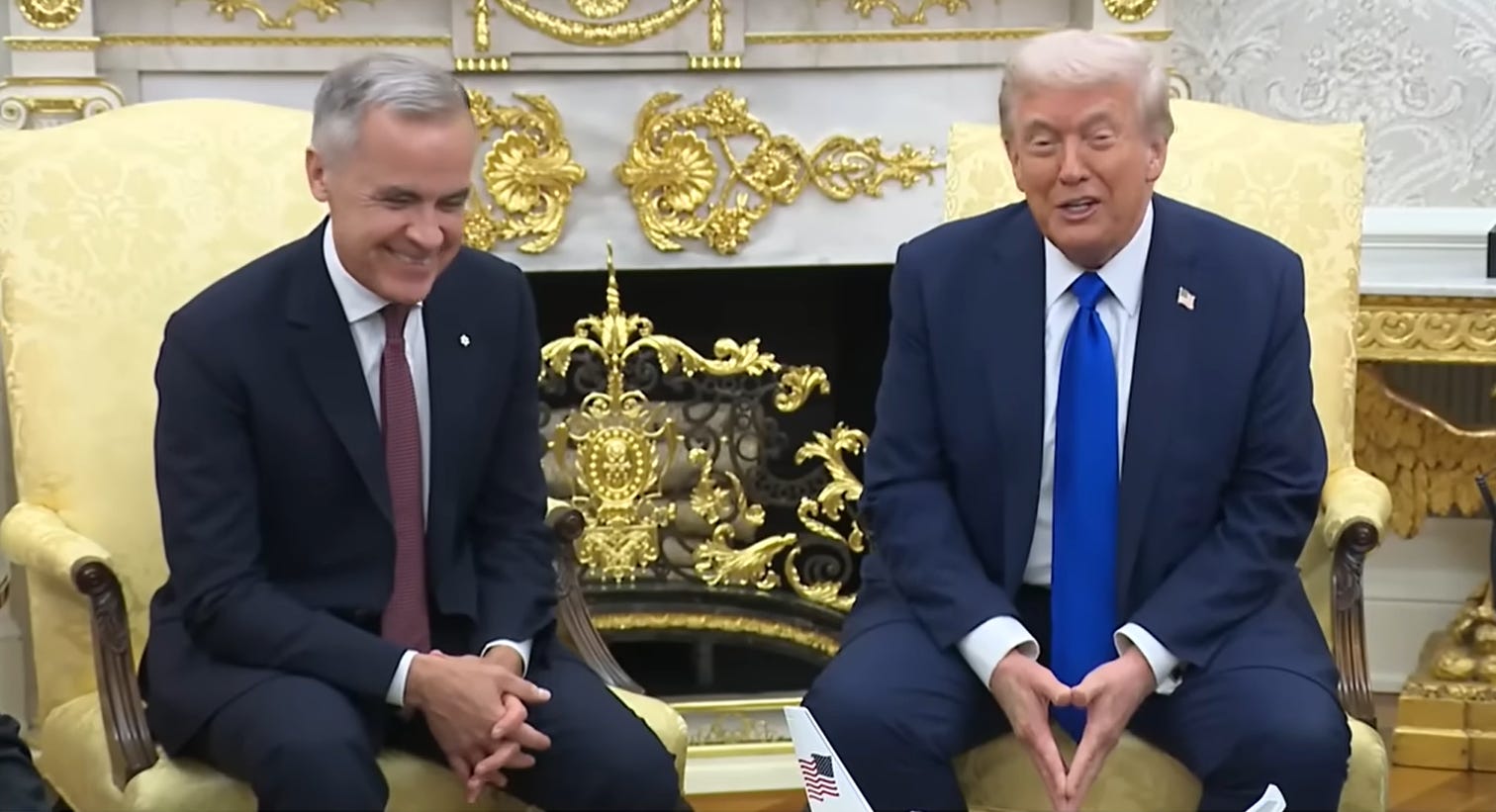
We see Trump as not only wanting more minerals (not just “critical” minerals but a cheap, secure future supply of uranium) from Canada but more hydrocarbons, too. Canadian oil serves a variety of economic, national security and pragmatic purposes for America.
Oil produced from the bitumen sand deposits around Fort McMurray, Alberta has properties similar to varieties the U.S. no longer produces. But that specific type of crude is still vitally important to the U.S. economy and national security, forcing us to import it.
Crude oil characteristics vary across earth’s geological basins. Two that matter greatly to refineries that produce the fuel that powers everything from rickshaws in India to giant mining machines and aircraft in the U.S. and Canada are density and sulfur content.
API gravity (API) is a measure of a crude’s density relative to water. Low API crudes are highly dense and known as “heavy” oils. High API crudes are less dense and known as “light” oils.
Sulfur content is measured as a percentage of weight. Crudes with content under ~.5% -1% are generally considered low sulfur, and those above high. Low sulfur crudes are termed “sweet,” with the higher content varieties known as “sour.”
Not all oil refineries are set up to refine heavy sour crude oils. But for those that are, the grades are ideal for producing two products central to the economy and national security of all advanced nations: diesel and jet fuel.
Most of the enormous growth in U.S. oil production has been in light sweet oils from shale formations unleashed by fracking since around 2010. But many U.S. refineries were optimized two decades before for the heavier, more sour crudes America was forced to import as domestic production declined over many years prior to the fracking revolution.
Refineries along the U.S. Gulf coast and some in the Midwest have been “tuned” to process these low API/high sulfur crudes with specialized coking, hydrocracking and desulfurization process equipment that yield large volumes of diesel and jet fuel. The light oils mostly produced by U.S. fracking are well suited for refining into gasoline and lighter products but less so for middle distillates like diesel and jet fuel.
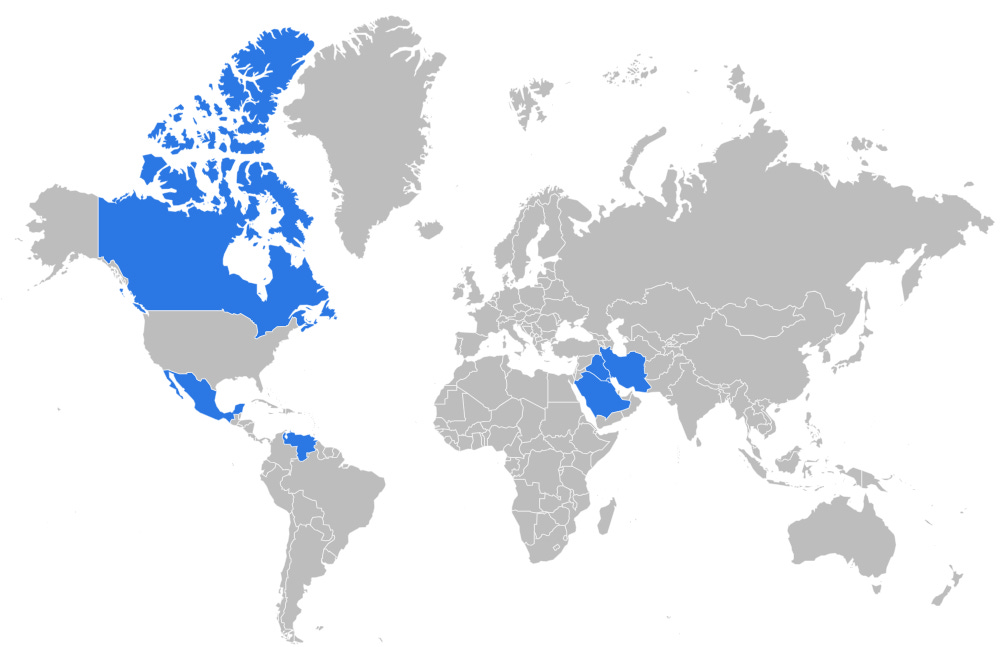
Today, ~80% of heavy sour crude processed mostly by those Gulf coast and Midwest U.S. refineries comes from Canada, Mexico, and Venezuela. Mexican production has fallen by half - to 1.9 mmbpd - since 2004. Since the start of Hugo Chavez’ dictatorship in 1999, Venezuelan production has fallen from 3.1 million bpd to ~900,000, or less. America mostly offset these losses by increasing Canadian imports.
The chart below shows the production status of the world’s five major heavy sour crude production basins:

By happenstance of geology, Alberta’s prolific Western Canada Select and Venezuela’s immense Orinoco belt crudes are both heavy sours with remarkably similar API and sulfur characteristics. Both are ideal for the U.S. Gulf coast and Midwest refiners with advanced cracking, coking and desulfurization hardware. And both commonly trade at discounts of ~$10 - $20 vs. benchmarks like West Texas Intermediate (WTI) and North Sea Brent crudes.
One other important consideration: As of the week ending December 5, 2025, the total inventory in the Strategic Petroleum Reserve was approximately 412 million barrels, an amount capable of supplying three weeks of U.S. consumption (~20 mmbpd). About 60% of the crude stored is historically sour, but the SPR does not typically store much heavy crude in order to make it easy to recover from storage and transport, with most of the reserve’s inventory having an API ranging from 30-45.
Gasoline, diesel, and jet fuel account for ~75% of U.S. crude oil consumption. Diesel and jet fuel are so critical to national defense that 85-90% of U.S. military mobility relies on the combination of the two. Commercial trucking, maritime shipping, and mining all rely heavily on diesel.
On December 16, Trump ordered a U.S. Navy blockade on all sanctioned oil tankers entering or leaving Venezuela. The situation that began with his blowing up drug trafficking boats under the auspices of stopping the flow of drugs into America expanded to (thus far) non-kinetic regime change by starving Maduro’s dictatorship of funds derived from what little Venezuelan oil exports remain.
Last week, when asked by reporters about this new tactic, Trump said the quiet part out loud:
“We’re not going to be letting anybody going through who shouldn’t be going through,” Trump told reporters. “You remember they took all of our energy rights. They took all of our oil not that long ago. And we want it back. They took it — they illegally took it.”
That Trump is pursuing a western hemisphere-centric energy policy is clear. Three or four decades ago, no such strategy would have been feasible. Today, the situation is quite different.
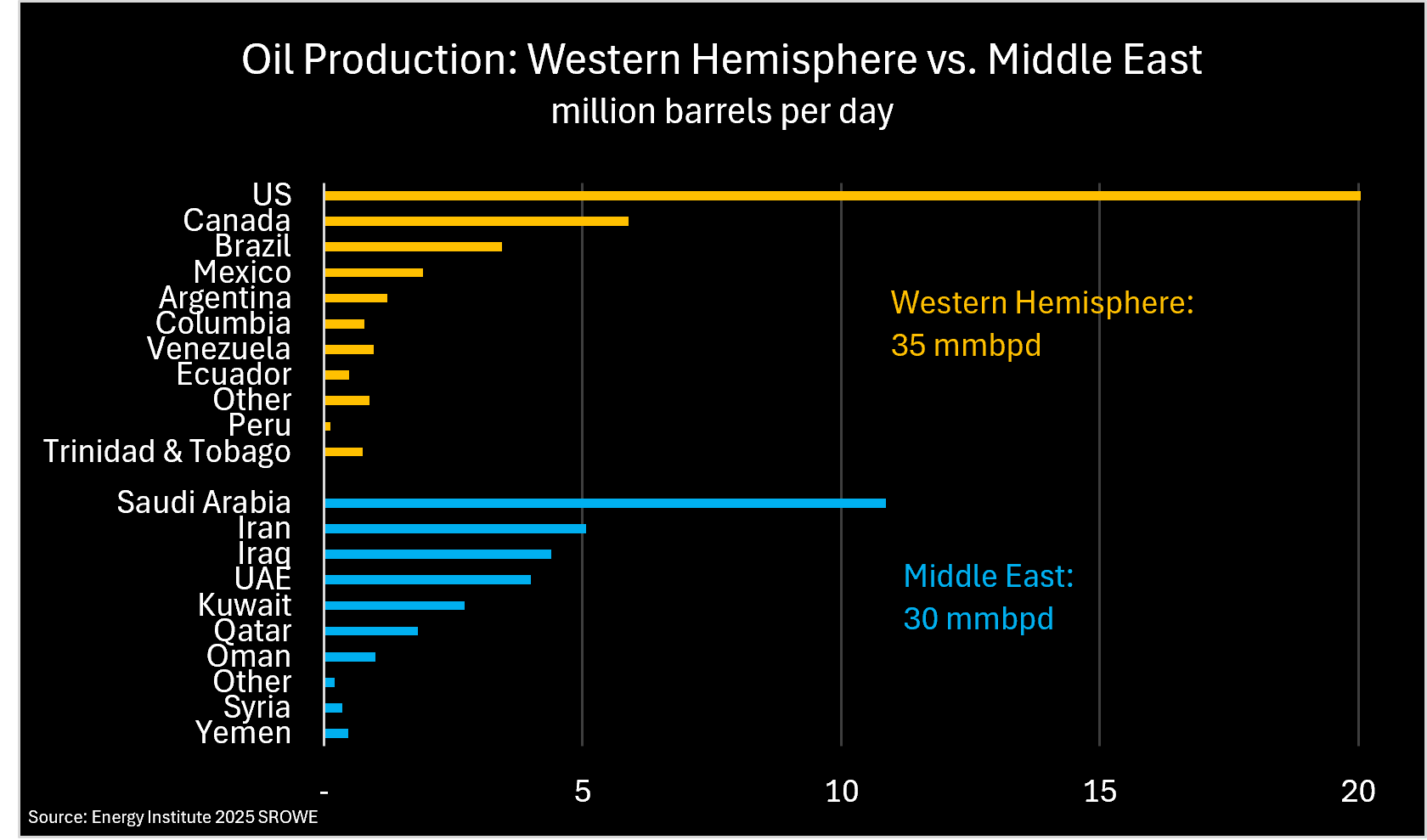
What about China and the rest of Asia, the ostensible purpose of an oil pipeline to the British Columbia coast? China has been rapidly converting its private passenger vehicle fleet to electric. And the rate at which it has been converting commercial truck engines, first to compressed natural gas and then to LNG, may have put a top in the country’s diesel demand.
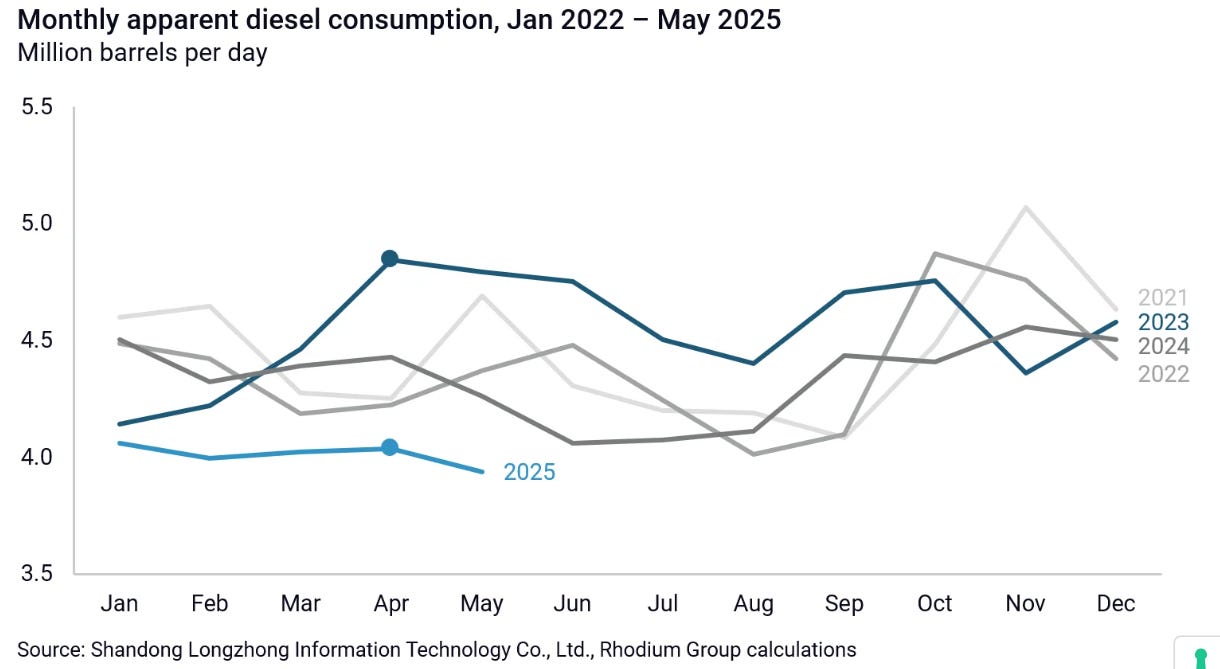
Japan is wholly reliant on imports of crude and refined products. But terminally low birth rates in China and Japan, like Europe, have serious long-term economic consequences with corresponding questions about crude oil demand.
Is it possible that the pipeline articulated in the Alberta – Ottawa MOU comes to fruition as planned? Certainly. But is it likely? Not in our view.
Instead, our mental model suggests that the plan was designed to fail. Prime Minister Carney and Premier Smith are playing a game of 3D chess in which everyone – including B.C. Premier Eby, the First Nations and even environmental groups – ultimately claims victory. And President Trump is in on it.
Alberta must submit its proposed pipeline plan to the federal government by July 1, and the MOU is clear the pipeline requires a private sector proponent. Soon, the required consultations with British Columbia and the effected First Nations will begin.
Concurrent with those obligatory events, the protests by aligned Canadian and international environmental groups, climate activists, First Nations citizens, and BC Liberal Party climate/Indigenous/environmental groups will be some of the largest in the country’s history. As a kinder, gentler culture, these will not devolve into scenes like the Dakota Access pipeline protests in the U.S., but the project will be seen by the protesters as something of a combined Indigenous land rights/climate/coastal protection “last stand” in B.C.
In conjunction with the requirement to share the project’s revenues with impacted First Nations, private sector pipeline proponents will be forced to consider the implications of how the recent Cowichan ruling in Richmond, B.C. might impact the project. Or whether unrelated legal challenges could kill it before it starts. Combined with the spectacle the aforementioned groups are sure to make – several of whom will also likely be litigants attempting to stop it – no private sector pipeline proponents will be secured, before (or any time soon after) July 1st.
Premier Eby, the First Nations, Canadian and international environmental groups, climate activists, and British Columbia Liberal Party politicians will defeat the planned pipeline to the B.C. coast. But they will be given “the win,” by design.
That will not mean the end of Alberta’s goal of producing and exporting more crude from the Ft. MacMurray oil sands. Quite the opposite.
The solution? Against all odds and the MOU’s stated objectives, that heavy sour crude will head south, through expansions of existing pipelines that already bring crude from those sources in Alberta to U.S. refineries in the Midwest and along the Gulf Coast, as well as new pipelines. Any Alberta oil headed to Asia will do so through a U.S. port, not one in British Columbia, the Northwest Territories, or any other Canadian coastline, even if this means a new pipeline to the U.S. coast in the State of Washington.
We close by noting the victories that will be claimed by all parties involved, not the least of which include President Trump.
It should be obvious that B.C., its Premier Eby, the First Nations, environmental groups, and climate activists and all those who fought and protested throughout the MOU consultations will claim their efforts stopped the project. They will take credit for saving British Columbia’s (incredibly beautiful) land, water, and coastal resources, and notch a win for earth’s climate in the process.
Premier Smith and Alberta oil and gas producers, initially panicked at the apparent momentum against them as the consultations with BC and the First Nations proceed, will eventually get all of the additional crude production from the province’s prolific oil sands they expected. It will just be headed south, not west. They will take credit for finding a way despite the forces of Premier Eby, First Nations, and the climate and environmental activists who were arrayed against them.
Prime Minister Carney will claim credit for having the power to stuff the project down B.C.’s and First Nation’s throats but not using it, instead choosing to respect both Indigenous land rights and environmental concerns expressed by the province’s residents. During the process he will “negotiate” a far more favorable tariff policy for Canada with Trump, with extra sweeteners for Alberta’s heavy sour crude, and be seen as helping to reconcile the relationship with Canada’s neighbor, ally, and principle protector.
Never bashful about taking credit, President Trump will brag about expediting permits and approvals for Canada – U.S. international pipelines, give Canada preferential tariff treatment, claim to heal the relationship with Canada and claim North America as a global energy powerhouse, a combination of outcomes only possible through his master deal making prowess. And by consolidating flows that would have gone to Asia, Trump will claim geostrategic victory, making China more dependent on Middle Eastern and African oil production rather than our friendly neighbor’s oil, thereby reducing the need for a large U.S. defense presence in the Middle East, all partly hedging against the failure of his gunboat diplomacy in Venezuela (for its heavy sour oil), just to be safe.
An industrial rebirth and thriving economy demand a secure flow of cheap diesel, and without diesel and jet fuel you don’t have a national defense. In that light, this partly looks like a deal for Canada’s oil sands to become something like a Strategic Diesel and Jet Fuel Reserve for America.
Trump appears to see energy security and independence under a new paradigm that breaks America’s historic reliance on oil from the Middle East, something of an energy-centered Monroe Doctrine 2.0. And with good reason: a western hemisphere energy corridor runs nearly the entire length of the North and South American continents, from Alberta’s oils sands through North Dakota’s Bakken and Texas’ Permian fields, and into Mexico’s eastern fields, then through Columbia, Venezuela, offshore Guyana and south into Brazil and ultimately down to Argentina’s Vaca Muerta. Including Peru, Ecuador and Trinidad and Tobago, this corridor produces ~36 million barrels of crude and crude products daily, while consuming less than 30 million. This what Trump sees when he considers hemispheric energy security and dominance.
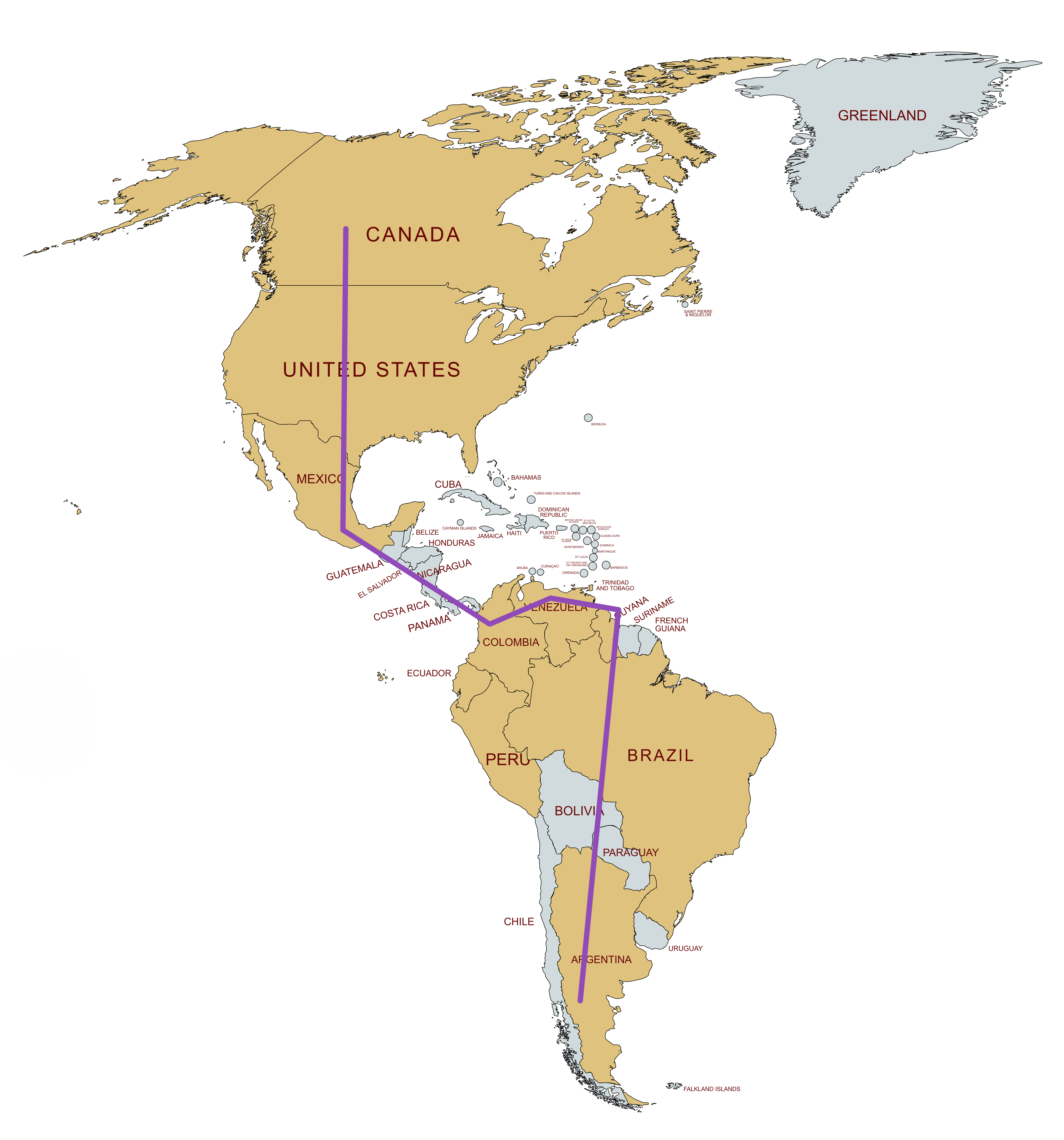
Three of the five oil fields still producing large volumes of heavy sour crudes are in countries in this corridor. Alberta and Venezuela have significant growth potential (Mexico’s appear to be in decline). The others are in places where decades of military entanglements with energy at their center inform a Trump foreign policy determined to avoid repeating history, and instead rely on energy sources in our own hemisphere.
A plan to lose the battle in British Columbia to win the war to grow Alberta’s oil and gas industry while securing the heavy sour crude on which much of America’s transportation fuel depends might seem like a strange plan, but we live in strange times. As Doomberg likes to say, a mental model does not need to be right, it just needs to work.
Alberta has six months to find a private sector pipeline proponent and submit its proposal to the Carney government in Ottawa. We’ll be watching for them to prove our model wrong.
“Like” this post or we’ll tar and feather your car with heavy sour Alberta crude.
Leave us a comment. We read them all and reply to most. Refuels the engine here.
Subscribe to environMENTAL for free below.
Share this post. Helps us grow. We’re grateful for the assist.
Great post. Just a small note; Coastal First Nations is not an actual tribe or nation. They are a non-profit activist group largely funded by US anti oil groups. Many actual BC first nations are pro pipeline.
Yes, i think you are right. Just this week Smith started talking about an alternate route thru the usa NW.
The fly in this ointment is the Carney and the Liberals have not changed, they are still net zero idiots, talking nonsense like "de-carbonized barrels of oil".
There is no Climate emergency hence there is no need for panic or for building the biggest white elephant in Canadian, maybe world, history, the Pathways alliance. Along with increasing the industrial carbon tax, this project will increase the oilsands cost per barrel by 25% and all Carney and Smith are guaranteeing is another wave of job cuts in the industry, for alberta.
This is ALWAYS the result of the feds regulations.
So less tax revenue.
Smith needs to grow a bigger pair and state that its all nonsense.
The one thing that does make sense is convert oilsands extraction to nuclear. The oilsands is a giant kettle burning gas to boil water that is used to liberate the oil from the sand. That is it, the vast majority of emissions.
Nothing better to boil water than nukes.
As we will be extracting the oil for centuries we will have to convert eventually, there will be no choice, we need to start today so as to save all those gas molecules for other uses.
No more subsidies for renewables.
No waste like pathways alliance.
Maybe a small industrial carbon tax that is used exclusively to help fund the implementation of nuclear.
implement over 20 years and then continue.
ITs not hard, it is the path, just need to get on with it.